Over the past two years, A Place in Childhood (APiC) has been working in partnership with Shetland Islands Council to embed meaningful participation by children and teenagers into local planning. Following the success of the Westside Living Well Locally Plan in 2024, Our next phase has expanded this work into two additional areas of the islands: the North Isles and the South End.
Building on the principles of the UNCRC and the methods outlined in APiC’s How To Guide for Co-creating Place Plans with Children and Teenagers, the project worked with more than 100 children and young people across seven schools. Their ideas now form two robust Living Well Locally Plans that provide immediate priorities and clear long-term visions for what children need to live healthy, happy and sustainable lives in Shetland.
These plans are more than consultations. They are co-designed place strategies, offering policy-ready insights that local stakeholders can act on now.
What We Did: A Creative, Place-Based and Youth-Led Process
Across May and June 2025, APiC worked with learners from Unst, North Yell, Mid Yell, South Yell, Sandwick, Dunrossness and Cunningsburgh. Each school shaped the process through:
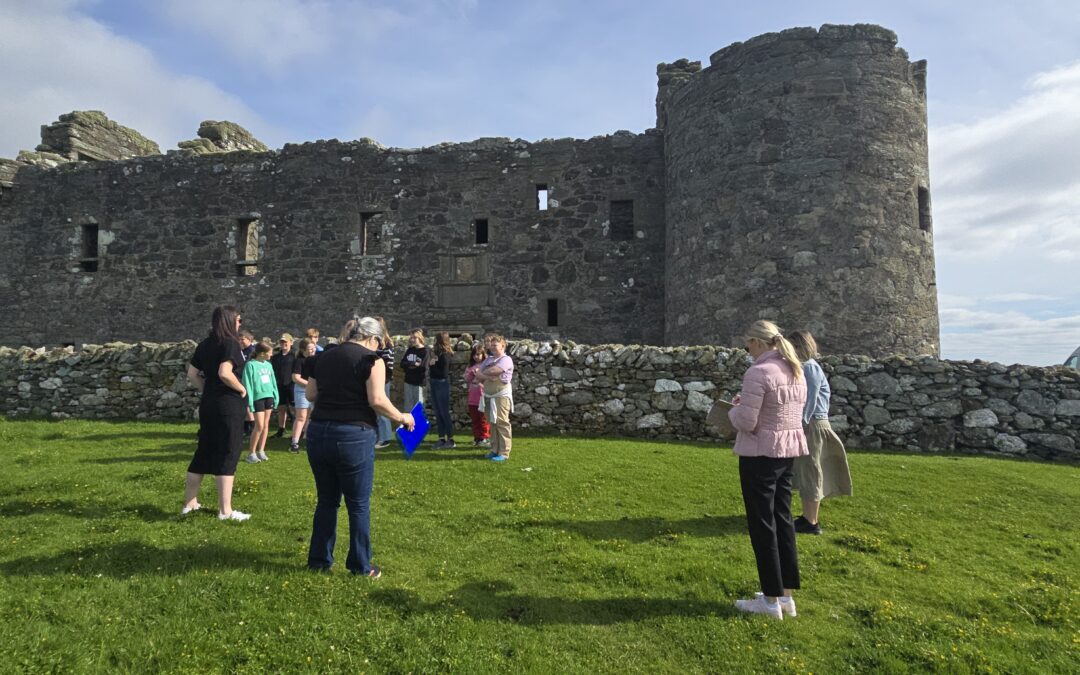
- Youth-led tours and experiential mapping of local areas
- Play-based and creative activities to surface what matters most
- Community showcases where children presented their priorities directly to councillors, officers and community groups
- Verification and refinement sessions in every participating school
- Stakeholder workshops to identify actions, responsibilities, and early opportunities
The result is a rich set of interconnected place plans that combine everyday lived experience, spatial knowledge and practical community insight. Together, they offer a compelling vision of how Shetland can support young people to live well locally.
The North Isles: Strong Communities, Freedom to Roam and a Vision for Sustainable Futures
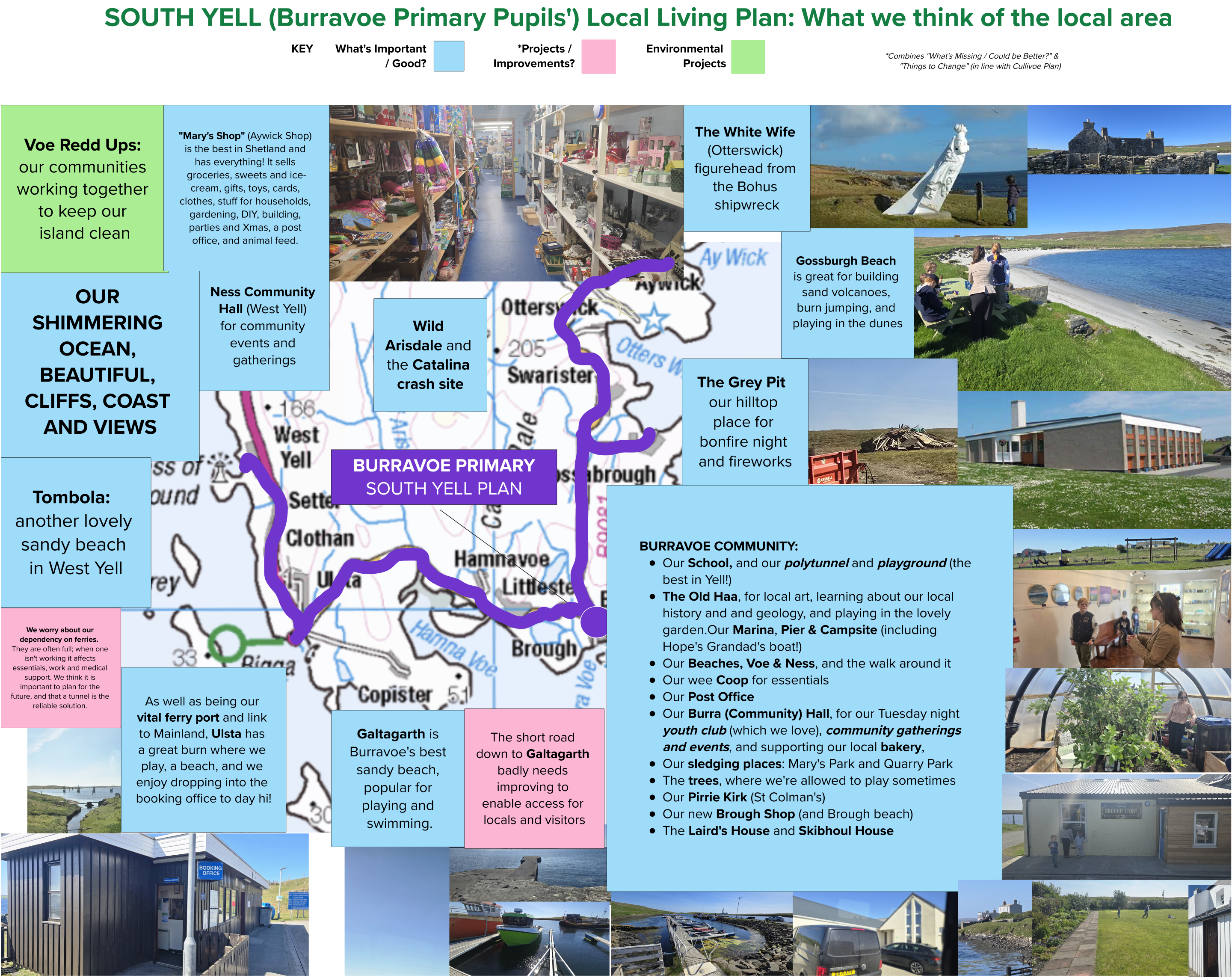
Children from both Unst and Yell described the North Isles as safe, tight-knit communities with deep-rooted culture, outdoor freedom and a shared sense of identity. Their priorities focus on protecting what makes the islands special while strengthening infrastructure for now and for future generations.
Community Sustainability
Children emphasised the importance of:
- Strong community organisations
- Affordable and accessible childcare
- Opportunities to grow the local population
- Community-led food growing, renewable energy, and ecological restoratio
Play, Recreation and Youth Spaces
Young people highlighted:
- The need to maintain and upgrade key playparks (e.g. Burra Park and Haroldswick)
- More access to indoor spaces for teenagers, especially in winter
- Better coordination of youth activities and transport
Paths, Transport and Strategic Connectivity
Children stressed:
- Safer routes for walking and cycling
- Improvements to important local paths (Breckon Sands, Galtagarth, Baltasound)
- Reliability and future-proofing of the ferry system
- Strong support for fixed tunnel links between islands as a long-term solution
Housing, Health and Emergency Response
The North Isles Plans also provide clear priorities for:
- Affordable homes for young people
- Managing second homes
- Training for first response and emergency situations
- Maintaining helipads for emergency access
The South End: Making Local Life Easier, Safer and More Connected
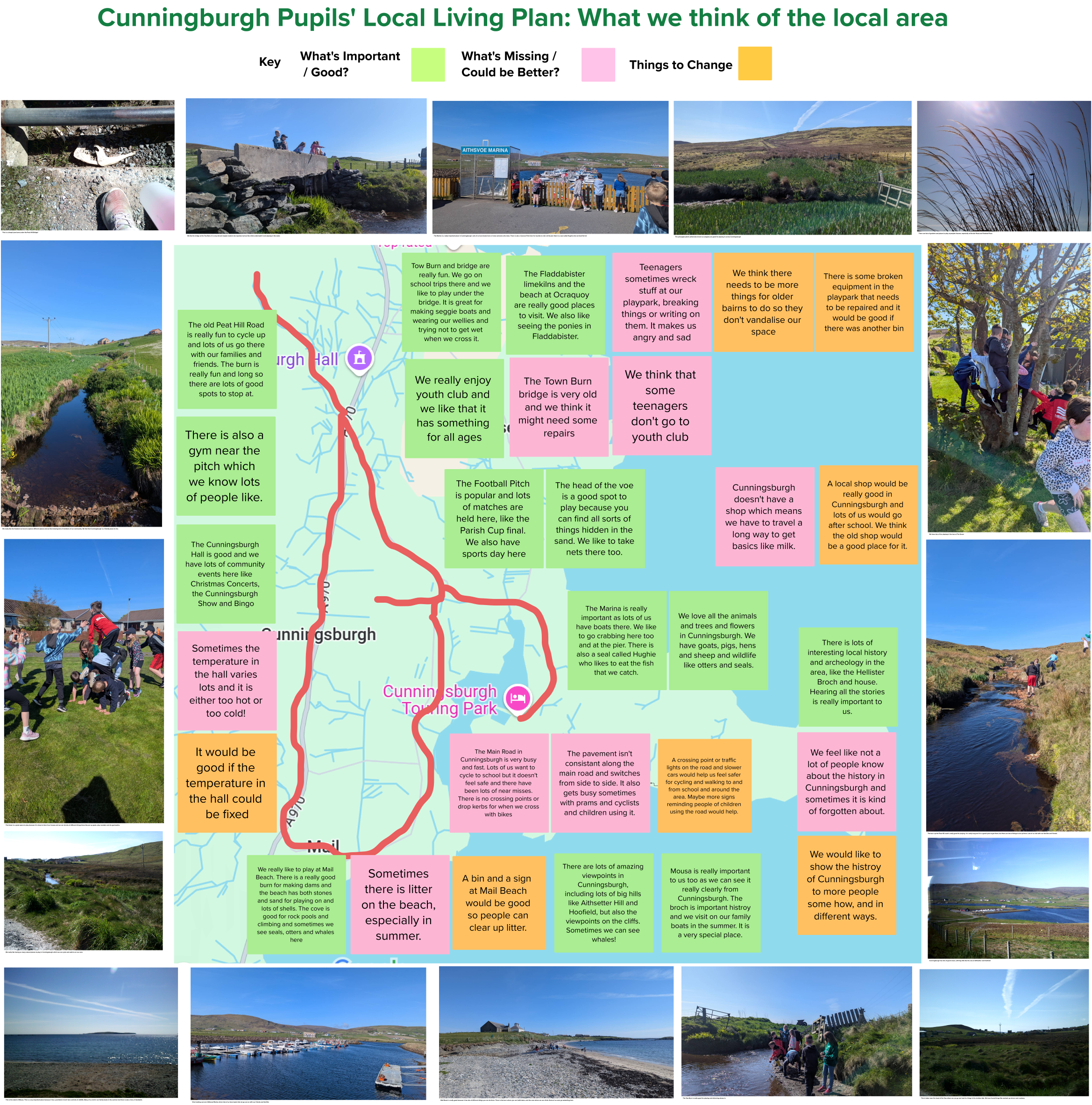
Children across Sandwick, Dunrossness and Cunningsburgh described a welcoming and active area with strong communities and stunning natural assets. Their priorities focus on improving access, safety, play, heritage and local services.
Keeping Places Clean, Safe and Well-Maintained
Children highlighted the need for:
- More bins at beaches, pitches and other well-used spots
- Maintenance of slippery or hazardous areas
- Fencing around dangerous cliffs
- Protection of local wildlife and natural spaces
Active Travel and Road Safety
Across the South End, traffic concerns were significant. Children called for:
- Better pavements and cycle lanes
- Safer crossing points on the Main Road
- Accessible paths that link key destinations
Play, Recreation and Youth Provision
Shetland has excellent play opportunities, but children identified several improvements that would help them thrive locally:
- Accessible and repaired play equipment
- A more exciting and safer bike track in Sandwick
- Mountain biking, climbing and gymnastics opportunities closer to home
- An indoor hangout space for older children and teens
Strengthening Community Facilities and Local Services
Children also prioritised:
- Better football pitch toilets
- A shop in Cunningsburgh
- Sharing and celebration of local heritage
- More benches in scenic areas
What Happens Next: Turning Plans into Action
Both the North Isles and South End Plans were welcomed by a wide range of stakeholders. Each showcase brought together representatives from planning, transport, active travel, community development, youth services, the Amenity Trust, hall committees and local development groups. Many have already agreed to participate in future working groups, supporting short, medium and long-term delivery.
This is already influencing important, statutory documents which will help shape the Shetland for today’s children:
- Local Development Plan thinking
- Active Travel Strategy delivery
- Play Sufficiency Assessments
- Community-led development
- Environmental sustainability work
- Transport planning and connectivity studies
The plans now serve as living evidence of children’s priorities—ready to guide future investment, partnership work and decision-making.
APiC’s Role: Supporting Children’s Rights in Practice
APiC specialises in high-quality, rights-based co-design with children and young people. We help local authorities and partners:
- Meet their duties under the UNCRC (Incorporation) (Scotland) Act
- Deliver meaningful engagement across planning, play sufficiency and community development
- Produce policy-ready outputs that can be used immediately
- Build long-term participation infrastructure for sustained impact
The Living Well Locally programme demonstrates what becomes possible when children’s insights are taken seriously: better plans, stronger communities and decisions grounded in lived experience.