Placemaking & Planning
Supporting councils, architects and communities to meaningfully involve children and young people in the design and planning of public spaces, neighbourhoods and regeneration strategies.
For councils, community anchors, architects, and others, who understand the value of involving children and teenagers in placemaking and planning. Through creative, rights-respecting, place-based methods, we help young people to co-design their neighbourhoods, public spaces and futures, turning what matters most into actionable proposals that shape real-world change.
Our approach is grounded in the UNCRC and built on youth leadership: children and young people are designers, decision-makers, and co-leaders—never token consultees.
Our toolkit blends experiential mapping, open-ended creative expression, and real-world planning constraints to support inclusive, ambitious visions for regeneration, development, or transition.
We are nationally-recognised experts in youth-led urban design, including facilitating young people’s input into the Place Standard Tool for Children and Young People. From Local Place Plans to regional Just Transition strategies, our award-winning work shapes policy, builds capacity, and nurtures shared ownership an responsibility in the next generation.
Young People’s Place Plans
Various: from the Borders to Shetland (Councils; FEL; Paths for All)
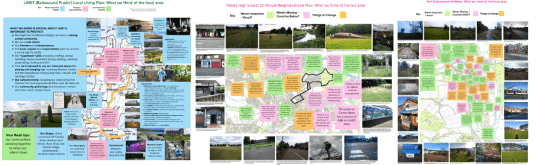
These projects set out to embed children and young people’s voices in Local Place Plans by supporting whole schools to articulate their needs, ideas, and priorities for more liveable, inclusive communities. Each involved experiential mapping, and creative, place-based, consensus-building workshops to explore what matters most to young people locally, culminating in coherent, youth-led spatial maps and proposals for local improvement.
Some examples include Drymen, where primary pupils developed a full 20-minute neighbourhood concept, linking play, mobility, nature and local food with practical survival and repair skills.
In Inverurie, secondary pupils created a suite of proposals focused on safe, walkable streets and more vibrant social spaces that reflect young people’s aspirations.
In Jedburgh, young people co-produced a community vision that blends cultural heritage, inclusive infrastructure, and safe gathering places.
In all three cases, the process successfully influenced emerging Local Place Plans by giving weight and visibility to youth perspectives within statutory planning.
Digital Urban Design
Glasgow (Minecraft) & Edinburgh (Cities: Skylines) (Sustrans Scotland)
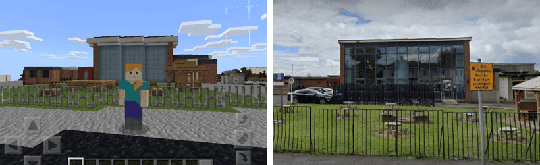
The first project aimed to centre children’s lived experience in redesigning public space in north-east Glasgow, as part of a wider infrastructure initiative, in collaboration with St Paul’s Youth Forum. Traditional youth engagement often limits children to reacting to adult plans, but this project reversed that, enabling them to lead the design process. We worked with pupils from St Philomena’s Primary, including those from the Enhanced Nurture Provision unit, combining site visits and group dialogue with collaborative Minecraft sessions set in a detailed replica of their neighbourhood. This gave children real agency and allowed their creativity to shine. Their designs were included in the local consultation for the ‘Flourishing Molendinar’ Places for Everyone scheme. The project won two national awards (National Transport Award and Learning for Sustainability Award) and provided a replicable model for meaningful, digitally-enabled, child-led urban design. Click here to read more about the project.
The second project involved high school pupils using Cities: Skylines to explore 20-minute neighbourhoods through design jams based on a virtual replica of Edinburgh. Linked to a live project in Gorgie/Dalry, the session surfaced how local places could better meet young people’s needs. Click here for more about the project.
Community Spaces
NEAT Connections, North Edinburgh (City of Edinburgh Council; AECOM)
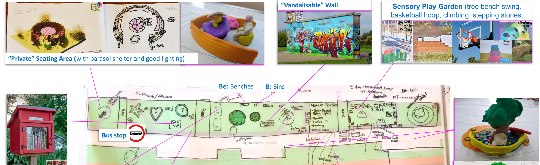
This project meaningfully involved teenagers from Craigroyston Community High School in shaping public space improvements along Pennywell Road in North Edinburgh. Over 2½ days, participants explored placemaking, safety, and belonging through site visits and open-ended, team-based co-design using Minecraft, art, and planning roles—engaging with real-world planning and budget constraints. Their proposals included a bookable shelter, sensory gardens, and a “Forth Bridge” park designed to be inclusive, family-friendly, and safe for girls. The strategy addressed antisocial behaviour through care, nature, and co-responsibility, culminating in a systems model to “reverse the chain reaction” of neglect.
AECOM joined the final session to explore integration with the wider NEAT Connections project. The process delivered a sophisticated, Council-aligned proposal while fostering confidence, ambition, and ownership among participants—a strong example of participatory urban design with teenagers facing high-intensity challenges. Read more in this appendix from our Teenagers and Public Space report.

Safe Urban Spaces for Girls
Leith Links, Edinburgh (AtkinsRealis; City of Edinburgh Council)
In May 2024, we partnered to deliver a dedicated workshop with girls and non-binary young people at Leith Links.
Building on our and Make Space for Girls‘ research, we created a safe, creative space for participants to share how public parks can better meet their needs—beyond sport and with greater focus on safety, inclusion, and belonging.
The workshop captured vital insights to inform final park designs, ensuring young people’s voices directly shape a more inclusive, welcoming space for all. This helps address historic gaps in park provision and supports wider aims for thriving, equitable greenspaces.
More information on the current stage of the design is available here.
Inclusive Urban Design
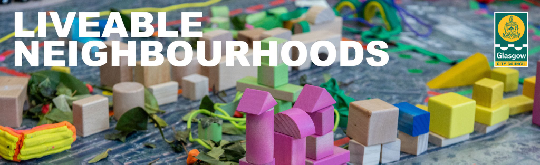
Liveable Neighbourhoods (Glasgow City Council, Collective Architecture; Arcadis; Make Space for Girls)
As part of Royal Institute of British Architects (RIBA) Stage 2, we partnered to deliver full-day co-design workshops in six local schools across Glasgow (primary and secondary schools).
Sessions engaged young people to shape design principles and develop early ideas for neighbourhood improvements, with a strong focus on safety, inclusion, active travel, and everyday use. A key focus was how the local areas could become more inclusive of the needs of girls and young women, in line with Glasgow City Council’s feminist town planning principles.
The workshops ensured young people’s lived experiences directly informed the design process. The design team and the City Council have taken their input forward into the next stage of deliberation on projects.
Click here for more information about the outputs and future intentions.
Climate Action Plans
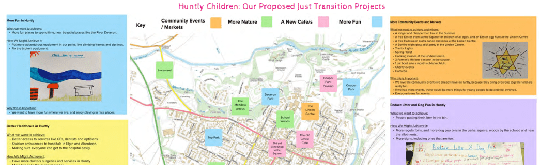
Young People’s Just Transition Plans (AFW; NESCAN Hub; Paths for All; Aberdeenshire Council)
We partnered with 12 schools across Aberdeen City and Aberdeenshire and engaged around 200 children and young people (ages 7–16) to co-design Local Just Transition Plans. We used APiC’s full child-led participation model, with pupils experientially mapping their local areas, sharing ideas, giving peer feedback, and in some cases, building on previous work with the same schools around neighbourhoods and public spaces.
The project produced fully consented, action-ready plans—some of which are already being taken forward—while empowering young voices in climate and community decisions and strengthening local wellbeing, education, and inclusion. This work laid vital foundations for a fair and sustainable local transition. Notably, ecological restoration consistently emerged as a top priority, but was typically underrepresented or missing entirely from adult-led plans —underscoring the importance of youth inclusion in local planning.
Click here to read the full report.
Defining Best Practice
APiC’s Guide to Co‑Planning with Young People (Paths for All; Local Partners)
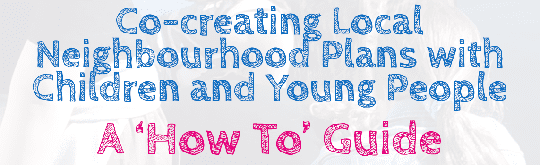
The Children and Teenagers’ Neighbourhood Plans Project created experiential children’s and teenagers’ maps of their local areas from their perspectives and collaborate with local stakeholders (e.g. Council, Community Groups) to identify and implement opportunities for improvement. Their insights shaped infrastructure changes, influenced placemaking decisions across departments, and inspired the creation of the How to Guide.
Our “How To Guide” for co‑creating place plans with children and teenagers, outlines a step‑by‑step methodology—from mapping local areas through the eyes of 5–18 year‑olds to identifying actionable interventions to reduce unsustainable travel and opportunities for places to better meet the needs of children and young people from their perspective.
Public Parks
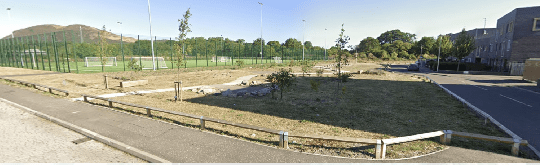
Art Park (City of Edinburgh Council; NHS Lothian; SVRU; Paths for All)
Art Park, co-designed with over 70 children and teenagers and APiC in Craigmillar, Edinburgh, to transform a forgotten green space into a vibrant, inclusive public art and nature park. Funded by Paths for All, with support from the City of Edinburgh Council, NHS Lothian, and the Scottish Violence Reduction Unit, the project emerged from the Children and Teenageers neighbourhood plan where young people expressed a desire for more creative, welcoming public spaces.
The park combines public art, play, and nature restoration—featuring nature play sculptures, an art rock stream, wildflower planting, and upcycled gathering spaces—to spark imagination, support biodiversity, and foster community ownership. The project prioritises sustainability and celebrates youth voices in shaping shared public spaces.
APiC worked with the children and teenagers of Jedburgh Grammar School as part of our collaborative Children and Teenagers’ Neighbourhood Project. The process was not only a meaningful engagement with young people, but also provided valuable professional development for council staff and local community groups. We were really pleased with how detailed the work was, and how much pupils and the school appreciated the opportunity. The outputs are now genuinely shaping the future of the town, and the children and teenagers’ proposed projects are included in the Jedburgh Local Place Plan produced by the Towns Team. It has been a pleasure working with APiC and we’d gladly collaborate with them again.
APiC worked with our pupils to get their views and ideas on how to make Huntly better for teenagers. They then skilfully facilitated discussions between them and local community stakeholders. I was struck by the level of engagement from our young people, and APiC’s flexibility, even during a challenging time. The outcomes of the work are very sophisticated and it now feels work will continue under its own momentum. APiC were a pleasure to work with, and I highly recommend their services to other schools.
We worked with APiC and young women and non-binary pupils from Leith Academy on a co-design workshop to ensure the design of the Leith Links Activity Hub is as inclusive as possible. APiC collaborated with us and AtkinsRealis to create a meaningful and creative session with the young people, who developed thoughtful designs and ideas that are now being incorporated into the proposals. Working with APiC has meant the design is more sensitive to the needs of people who are often not included enough in planning and design. This is a real specialism of APiC and something we found really valuable – we can’t recommend them enough.
We’re here for all who believe in and invest in young people—championing their right to flourish and contribute as equal stewards of today and tomorrow, on their terms.
We support policymakers, researchers, planners, practitioners, educators, architects, third-sector leaders and philanthropists who know we can -and must- do better for young people—and understand that reintegrating their wisdom, creativity, and potential into society will build a better world and future for everyone.
Our services are fully bespoke—shaped around your goals, constraints, and context. Integrating research, placemaking, co-design, and training, and grounded in shared values of youth leadership, capacity-building, and rights, we bring the skill and experience to make your ideas work.
If you’re ready to act, we’d love to work with you – get in touch to start the conversation.
Contact us
Our Services
Our Projects
Become an APiC Supporter
As a supporter, you’ll receive periodic updates about our activities and opportunities to volunteer with us.
We use Mailchimp to collect this data. By entering your details on the form, you consent to being contacted by email and the processing of your data in accordance with our Privacy Policy and that of Mailchimp.
© A Place in Childhood CIC is a Community Interest Company operating under the trade name of A Place in Childhood. Company number: SC735696. Registered address: 5 South Charlotte Street, Edinburgh, EH2 4AN. Website design by Sean Peacock