When children and young people are taken seriously, we all thrive. This simple truth sits at the heart of our work at A Place in Childhood (APiC), and it is something I was interested to see powerfully echoed in my recent reading of Alice Miller’s seminal book The Drama of the Gifted Child. In this exploration of the child’s psyche, Miller warns how damaging it is for a child’s true self to remain unseen or dismissed, and how this can lead to deep impacts that can ripple into adulthood.
Yet too often, children and teenagers are either not heard—or not believed—on the matters that shape their lives. We must change this because, when we truly listen, young people bring fresh insights adults alone cannot reach. And crucially, they learn lifelong skills for articulating their views, trusting that their perspectives matter, and actively shaping the world around them.
Seeing the World Through Younger Eyes
Children and teenagers today are navigating an interconnected world of emotion, social dynamics and pressures which may be recognisable from our own youths, but are now played out in a more complicated setting. New challenges posed by technology, poor quality environments and multi-faceted global crises have introduced new, unknown challenges to the youth experience which are difficult to navigate both for themselves but also in our role as adult guides to the world.
However being empathetic toward the world of children and teenagers means recognising how different it feels to live in their shoes. In our increasingly loud and frantic world, It is one of the most powerful things we can do. It never ceases to amaze me how much I learn about the world when we spend time walking beside and listening carefully to children and young people.
In our Teenagers and Public Space project, one young woman powerfully described how adults dismiss teenagers’ concerns about global issues like climate change or black lives matter as “just being young.” As she said:
“There’s a lot of people that think we’re joking or we’re being silly talking about climate change and we’re just young. But I think teenagers can have a big difference—you just need to take on board the stuff we say.”
Every time the “true self” of a child or young person is unseen, it becomes harder for them to show it next time. It can also contribute to a need to be seen in other ways, that may be more destructive for the young person and others around them. Therefore it is essential that adults create space for the perspectives to be acknowledged and taken seriously.
Taking Children Seriously in Practice
At APiC, we’ve seen the transformative power of taking young people seriously through our co-creation work. In Shetland, our Children and Teenagers Living Well Locally Plans have invited young people to shape how their communities should function for everyone. Children and teenagers have spoken up about practical matters like safe crossings, better transport, and places to hang out—but also about emotional needs like belonging and community pride. We are delighted to see that some of these very practical suggestions are already being taken forward. For example, Neil Hutcheson of Shetland Islands Council noted:
“It was interesting to get a different perspective and to learn of young people’s priorities. The pupils’ work resulted in a detailed account of what could be done to improve each area for young people and the wider community. The detail they provided on walking routes was of particular interest and we will be using it going forward as part of the active travel settlement audit process. This should result in improved facilities for walking and cycling that better meet the needs of their communities.”
Another example came from our work in Inverurie, where children raised the topic of love and care during neighbourhood planning sessions. What began as a simple mention blossomed into a profound discussion about community spirit, relationships, and how physical spaces could help people connect more kindly and joyfully. It was a conversation few adults would have anticipated (we didn’t!) — but one that opened new possibilities for creating more caring communities.
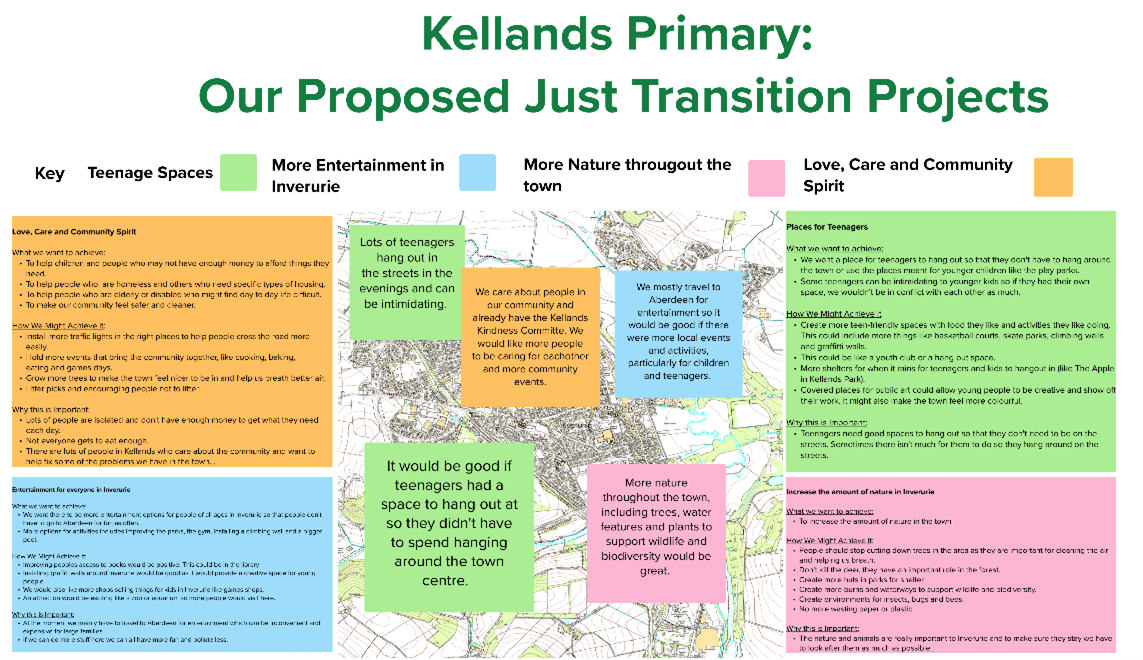
A powerful pattern we often see is children and young people’s consistent concern for the natural world. Through our co-created neighbourhood plans, young participants regularly surface deep insights, appreciation for, and projects to enhance local nature and biodiversity. Children instinctively connect community well-being with the health of local ecosystems. This connection can teach us so much that many of us knew as children but have forgotten as we’ve aged.
Partnership, Not Power Over
A vital part of taking children seriously is shifting from seeing them as passive recipients of adult decisions to recognising them as partners in shaping the places they live. This aligns powerfully with the UN Convention on the Rights of the Child (UNCRC), which states that children have the right to be heard and to have their views taken seriously in all matters affecting them.
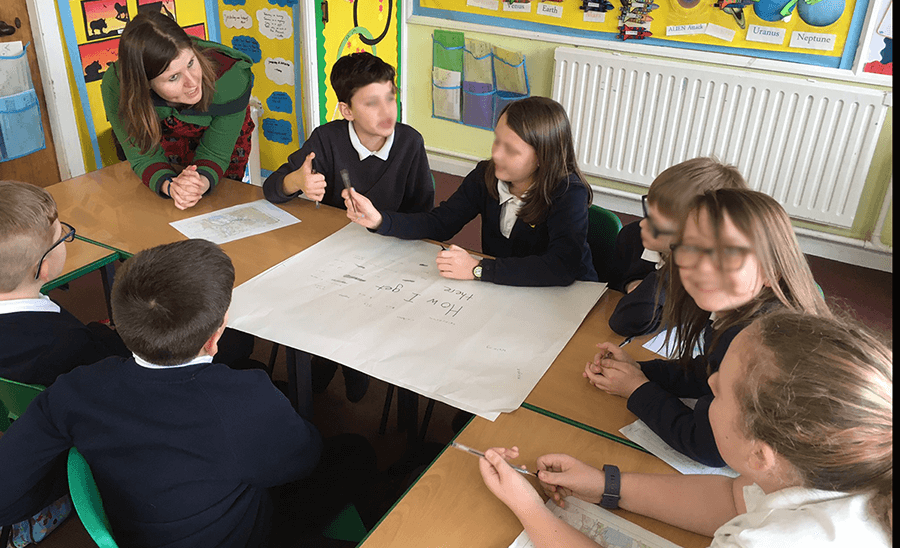
At APiC, we’ve found it incredibly powerful to simply ask children and teenagers for help. Saying, “Can you help me understand this?” levels the power dynamic and asserts that we are equals in exploring solutions. It encourages young people to challenge us, to disagree, and to bring their own expertise to the table.
We saw this in action during the Children and Teenagers Neighbourhood Festival in Falkirk. Pupils volunteered for significant roles—from planning logistics to designing activities—and rose to the challenge with immense pride. They also told us how many new skills they learned through the experience, reflecting the principles of Play Pedagogy and Scotland’s Skills 4.0 framework. Through such opportunities, young people develop “meta skills” like creativity, critical thinking, and social intelligence, that will serve them not only at school or work but throughout life.
Learning How to Listen
There is also a practical and vital need to take the perspectives of children and teenagers seriously, and that is recognising that they see and feel things adults often cannot. From being physically smaller and therefore closer to the ground, and without access to independent travel, they provide a granular and detailed insight into the functionalities of place and communities. From early childhood to teenage years, their ideas can improve communities, build social cohesion, and spark innovations we might never imagine alone.
At A Place in Childhood, we’re committed to helping others learn how to meaningfully involve young people. Our How To Guide on Co-creating Neighbourhood Plans with Children and Teenagers offers practical steps and insights drawn from years of experience, while our training offer equips professionals to engage young people in authentic and impactful ways. Whether you’re a planner, architect, policymaker or community group, we’d love to help you transform how you work with children and teenagers.
Because when children and young people thrive, we all thrive.
If you’d like to learn more about how to engage young people meaningfully in planning and placemaking, please get in touch with Dr Jenny Wood at jenny.wood@aplaceinchildhood.org.